Divorce Lawyer Gainsborough recognize that obtaining an annulment can be an incredibly complicated and emotionally charged period of time and therefore remembering and learning what to ask can be a tough task. Rest assured there are no right and wrong queries.
It is most important to furnish us with as much facts as feasible and never ever be worried to ask questions. Our team will continually make time for you and offer the support required. The answer you get may not always be the answer you want or anticipate,but will be an answer from expertise and know-how with your best interests at the center.
We can not give an exhaustive list of all queries to be asked as every case is one-of-a-kind,nevertheless here are a few essential queries to get you started which can be asked at a preliminary assessment:
Do I have to get Divorced?
No. Only you can choose if you want to get divorced but there are typically a range of options which we will describe to you at your 1st session. You may only know what you want to do when you have spoken to our team and listened closely to our advice.
Do I need a Legal representative?
The short reply is no. However,we strongly encourage that you do instruct a legal professional.
Upon your upfront appointment with us you will see the knowledge and professionalism of our team at Family Law Gainsborough that will give you the peace of mind in assigning us.
The risk you take in not assigning a legal representative is that without proper legal guidance you may not follow the right divorce process which can develop delay and incur extra charges. Further and more significantly you may not get the best resolution you could and can not make informed choices.
How much will it set you back?
As will be repeatedly stated,every case is different so we can not tell you definitively what your divorce will be priced at. We will however always give you a quote and be able to tell you the costs of the court fees. Court fees are known as disbursements and you should ask what other disbursements there could be and ask for an estimate of anticipated disbursements.
We want our customers to comprehend the cost of instructing us,so they don’t enter into something they may not be able to have the means for. We are here to aid and not cause extra stress. Knowing the estimated cost from the outset will allow you to budget correctly.
Did you know,according to the United States Geological Survey,nearly 270 million people rely on a public water supply annually? This statistic vividly portrays that over 85% of the US population leans on public,city,or municipal water suppliers to deliver pristine water for residential and Commercial purposes.
For those tapping into public sources,comprehending the intricacies behind the journey of clean water to your faucet is indispensable.
Water treatment facilities meticulously adhere to water quality standards outlined in the EPA’s Safe Drinking Water Act. However,each facility tailors its methods to meet these standards,adapting to the unique characteristics of its water sources. Consider this: a facility dealing with sediment-rich water employs a distinct process compared to one combating an influx of microorganisms.
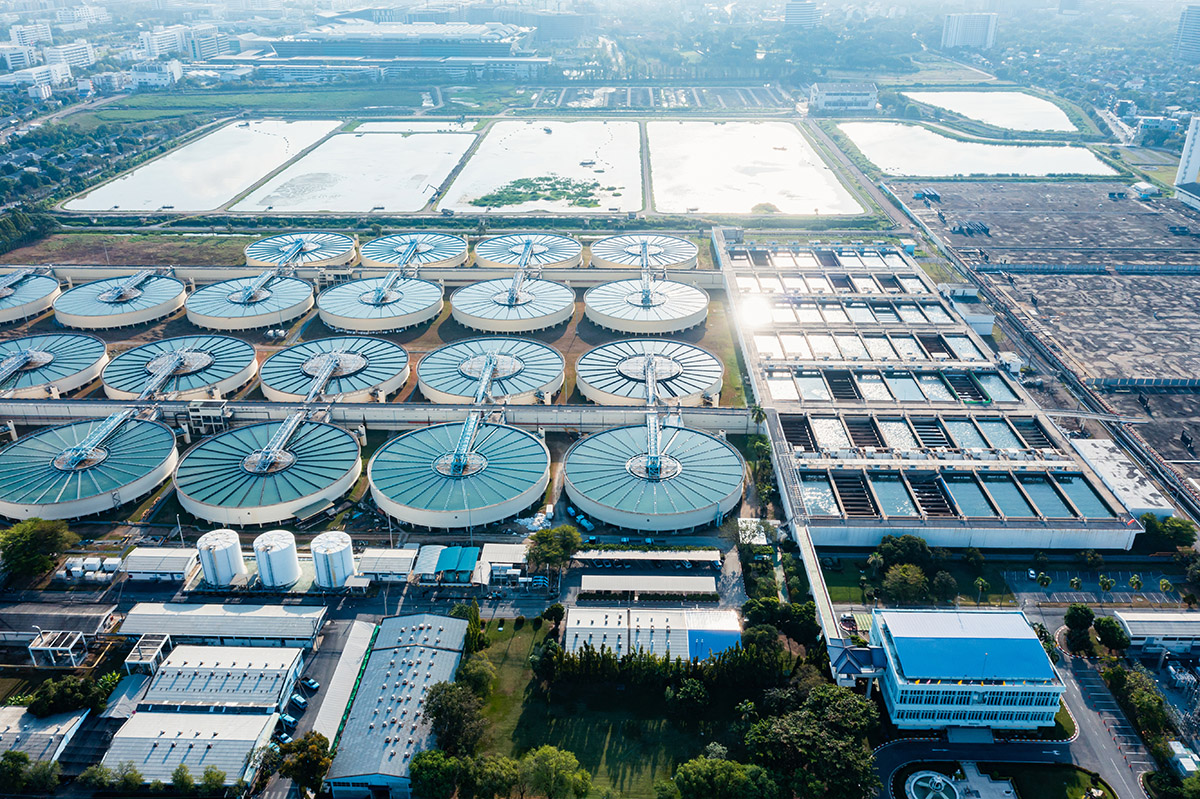
Let’s dive into water facilities’ standard treatment processes that ensure safe and clean public water Delivery.
Choice of Water Source
The selection of a public water source is a multifaceted decision. It hinges upon factors such as proximity to the populace,volume availability,quality assessment,and the encompassing environmental and geological milieu. Diverse options,including lakes,rivers,springs,and groundwater reservoirs,serve as potential and viable public water supply sources.
Following the discernment of an appropriate water source,the water treatment facility initiates the next phase by channeling the selected water through a designed pipe network system.
Screening Away the Debris
Screening is the initial phase as the water flows into the water treatment facility. This critical step serves as a frontline defense for debris removal. It safeguards the machinery from potential clogging. Dead leaves,branches,and assorted waste materials are meticulously filtered out,ensuring that only particle-laden water proceeds through treatment.
Binding of Particles with Coagulation
Particles in the water are comprised of dirt,oils,and assorted dissolved contaminants. They pose a challenge for mechanical removal due to their composition.
These particles typically bear a negative charge. To address this,water treatment facilities introduce coagulants characterized by a positive charge. These specialized water treatment chemicals effectively intertwine with the particles,creating larger aggregates.
Among the commonly employed coagulant agents are aluminum sulfate,sodium aluminate,ferric chloride,and ferric sulfate,each playing a pivotal role in particle aggregation.
Throughout this process,the water undergoes high-energy mixing to ensure the optimal distribution of the coagulants,maximizing their efficacy in binding with the particles.
Forming of Flocs with Flocculation
Following the initial stage of coagulation,where larger particles emerge,the flocculation process takes center stage. This pivotal phase further enlarges the particles into cohesive clusters known as flocs. Gentle mixing encourages these particles to unite and form larger,aggregated flocs.
Upon the formation of flocs,water treatment facilities introduce polymers,enhancing the aggregation of these flocs and fostering an efficient amalgamation process.
Separate Solids with Sedimentation
During the sedimentation process,water enters designated settling tanks for quiescence. Within this phase,the combined floc masses bind post-flocculation,gaining weight and density.
As a consequence,suspended solids,now denser,gravitate toward the tank’s base,forming a distinct sludge layer. This separation effectively delineates the solid components from the treated water,marking a pivotal stage in the purification process.
Further Removal of Particles with Filtration
Following sedimentation,the water undergoes a critical phase: filtration. This pivotal stage aims to capture residual particles lingering within the water. Employing diverse filter layers composed of materials with varied pore sizes,the filtration process meticulously sieves the water.
Conventional filter media like sand,gravel,and charcoal play integral roles by trapping dirt,sediments,and other debris. Additionally,advanced filtration methods diversify the purification approach. Ultrafiltration screens,equipped with micropores,selectively allow water and minute molecules to pass. Meanwhile,in reverse osmosis,pressure drives water through a semipermeable membrane,effectively treating used water or saline solutions in particle removal.
Disinfection to Kill Microorganisms
The conclusive water treatment phase is disinfection,meticulously designed to eradicate lingering disease-causing bacteria for water safety.
Among the prevalent disinfection methods,chlorination is the most commonly employed technique. Introducing chlorine to the water effectively neutralizes microorganisms,contributing to their elimination. Moreover,residual chlorine is a protective shield,eradicating germs within the pipeline network and assuring sustained water safety from the treatment facility to your residence.
In addition to chemical disinfection,physical methods play a vital role in water treatment. Utilizing ultraviolet light (UV),electronic radiation,gamma rays,and heat disrupts the cellular activity of microorganisms,contributing further to purification.
One of the easiest and most inexpensive design trends to accomplish with your new custom home is tying in the latest color trends. Whether you are choosing the Exterior colors for a new construction home in the Northwest or deciding on a color palette for your interior walls, furniture, and upholstery, the key is to achieve a timeless look that isn’t too bland. When selling a home, the rule is to go neutral. When moving into your custom home, the secret is to go bold and express confidence with colors that make you feel good. An all-white color theme works well as long as you dial-up personality. Add color in the form of colorful appliances, décor, and furniture.
Keeping It Cool
The color trends this year are getting away from the earthy blues and browns and gravitating toward cool tones such as gray and white. White décor gives a home a simple and crisp, clean appearance. In keeping with the monochromatic pale theme, consider blond wood furniture and sheepskin throw pillows.
Staying On Trend
When it comes to interior paint choices, you don’t need to worry too much about what’s on-trend versus what’s just trendy and will fade out of fashion in less than two years. Because paint is relatively inexpensive, it does not cost a lot to paint over any decorating faux pas. On the other hand, you can spend too much on trendy furniture that is much more expensive to change out if you grow tired of an unusual color.
Expressing Your Personality
Different colors affect people who live in a home. The psychology of color indicates a person feels soothed by blues but energized by reds and yellows. Some people believe purple inspires creativity. Some of the hot housing trends this year include using sophisticated coral shades for an accent. Bright colors pair well with the crisp whites and grays. Other color trends include painting rooms in violet, lilac, and green.
At HiLine Homes, we are dedicated to our clients The Northwest. We are an on-your-lot builder offering a price lock guarantee. For more information on how to get started building a custom home, click the link below!
There are plenty of possibilities available to you when it comes to driveways. A private drive can add substantial value to your home and make it a better place to live. Some options will set you back more than others, but there is a lot of choice available whether or not you’re on a tight budget or have more to invest. Talk to us for more Doncaster Landscaping
Tarmac driveways
Tarmac or asphalt private drives are also extremely inexpensive and are known for their solid climate resistance. Driveways made from tarmac are also very long lasting, which makes them a great match for larger Vehicles. They also have a smooth finish, which means excellent skid resistance. Tarmac driveways can easily survive hail, ice and storms. tarmacadam is also an ideal match for the eco-conscious due to the way that the material can be used indefinitely. For a great solution visit Doncaster Landscaping
Block paving private drives
Block paving is based around interlocking, which gives you added durability. It can be designed in a range of designs and you can simply replace individual bricks if they are damaged. One other key benefit of block paving private drives is that they have great fade resistance. A block paving driveway can last for up to 20 years. These driveways do not require top polishing, and there is normally no need to repaint them even years down the line. All you generally need to do to maintain a block paving private drive is to clean it with soap and water. Block paving private drives are also popular due to the way that they can withstand harsh weather with ease.
Resin-bound and resin-bonded driveways
Resin-bound and resin-bonded private drives have become progressively well-liked over recent years. Resin-bound driveways are water-permeable. Whilst resin-bonded systems have resin spread across the surface with loose stone scattered on top of them, resin and stone are mixed together and trowelled into place to develop resin-bound systems. These systems give you a great deal of choice when it comes to versatility and colour.
Indian stone private drives
Indian stone driveways offer the look of natural sandstone, and there are plenty of patterns and shades to choose from. One of the key benefits of Indian Sandstone is that it doesn’t generally split, crack or peel. This stone also has non-slip qualities.
Stone private drives
Natural stone driveways are quick and straightforward to put in and may be the ideal alternative if you’re on a budget plan. A huge advantage of having a natural stone private drive installed is that you’ll be alerted when somebody pulls up on your drive or walks across it. This means it can be a great discouraging factor for trespassers. These private drives also need little upkeep.
Cobblestone and brick driveways
Even though they’re not as well-liked as they once were, Cobble Stone and brick driveways offer a highly distinct, attractive look. These driveways offer good protection to freezing and are uncomplicated to maintain. They are also noted for their toughness and can be personalized to your specific requirements and preferences.
Pattern-imprinted cement private drives.
Pattern-imprinted concrete private drives are also known as stamped cement and decorative concrete driveways. These private drives offer a highly resilient surface and can easily withstand heavy weights. Another reason why these private drives are so popular is that they require little servicing. There are many designs, styles, colours and patterns to choose from. No matter what your tastes and inclinations are, it really should not be too difficult to find a driveway style that fulfills your requirements.